The art of Bonsai
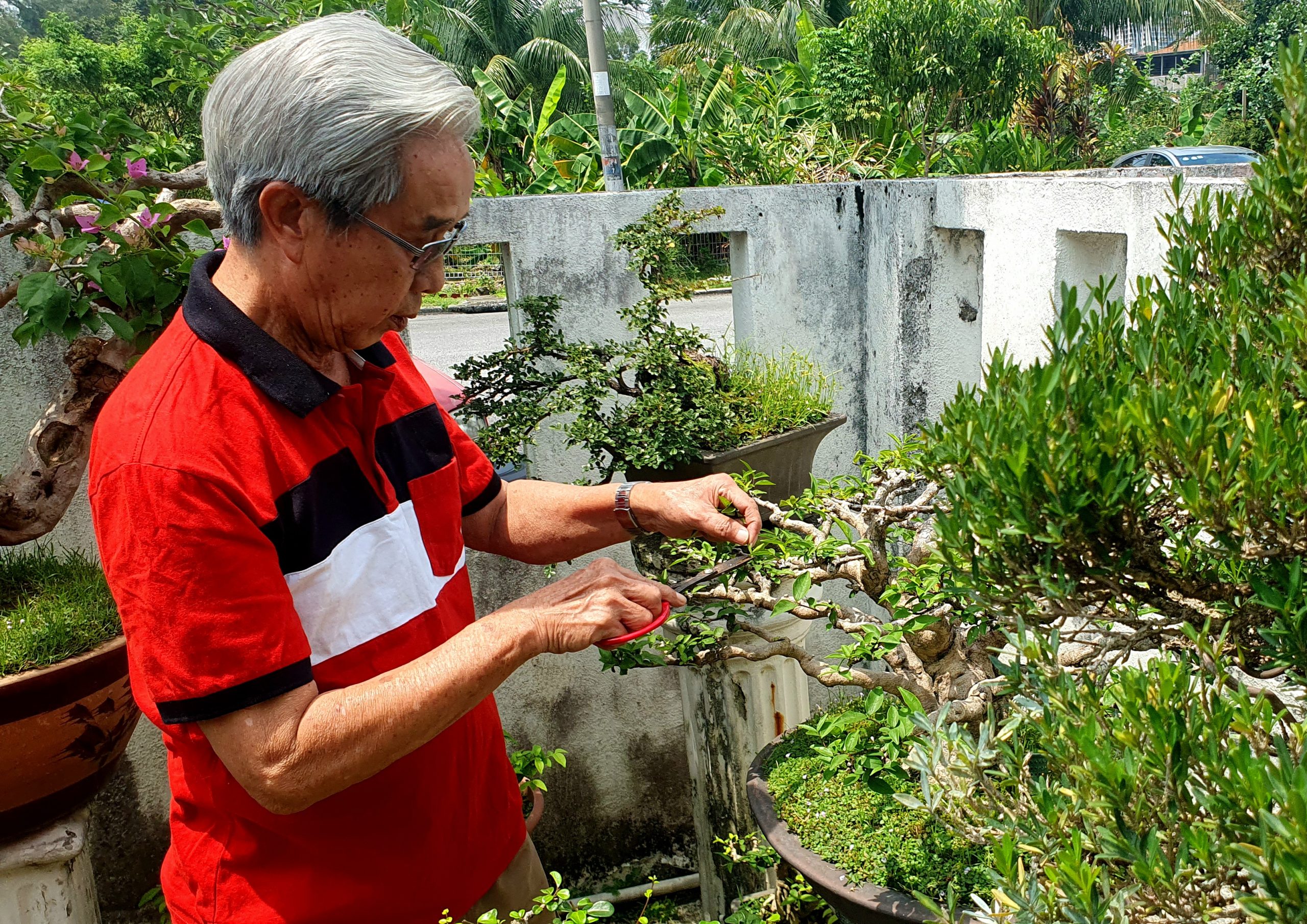
The practice of Bonsai is the simple art of cultivating and manipulating a plant into the form of a miniature tree. It was first known as Pun-Tsai or Penjing, an ancient Chinese horticulture, over two thousand years ago.
The Japanese adopted this unique horticulture practice during the Kamakura period and redeveloped it under the influence of Japanese Zen Buddhism. Now widely known as Bonsai, which literally translates as “a plant in a container”, it continues to captivate millions across the modern world.
The Bonsai bug
Prior to 76-year-old Ee Chen Yoon’s retirement, he was very active and played several sports including squash, badminton and golf. He also enjoyed fishing and even tried his hand at rearing Arowana, a fish known for its beauty and considered to be ‘lucky’ by many in the Asian culture. But it became harder for him to keep up all these activities as old age crept in.
For Ee, the draw of the Bonsai art started before his retirement while he was still working in the finance department at a local supermarket chain.
“My love for Bonsai is due to my younger brother’s influence. We would both travel to Melaka, Batu Pahat, and Johor Bahru, just to look at Bonsai trees. He would take me everywhere!” Ee enthusiastically recounts. “It was all still very new to me then and I would start small with the cheapest trees. My brother, in his generosity, would sometimes give me a Bonsai tree to cultivate, especially after he knew that I’d gotten bitten by the Bonsai bug,”
First steps into Bonsai
Despite having a younger brother to guide him, it didn’t come naturally. While Ee had some experience in gardening, he had to learn from scratch on how to grow a Bonsai tree. He had to learn to re-pot properly, trim the branches, and to shape the plant with copper wires into the image he envisions.
There was a fair amount of trial and error for him as he grew to appreciate Bonsai as an art and not merely as a gardening activity. More than anything, Ee learnt about patience.
“Depending of the type of tree, It takes about 7-10 years for a Bonsai tree to mature. You have to be very patient. Go for the smaller and cheaper trees. It should cost you about RM100-250 for a beginner-ish plant, trimming tools, and fertilizer.”
“When you’re choosing the plant, just buy the one that catches your eye and speaks to you. Don’t bother too much about what other people’s opinions are on which plant you should buy first. It’s like asking a girl out, just pick the girl you’d like,” Ee said, winking mischievously at his missus sitting nearby.
Ee also shared on how he increased his knowledge through reading books about Bonsai and also joining the local Bonsai club where he was able to learn hands-on from those with greater experience.
Bonsai for two
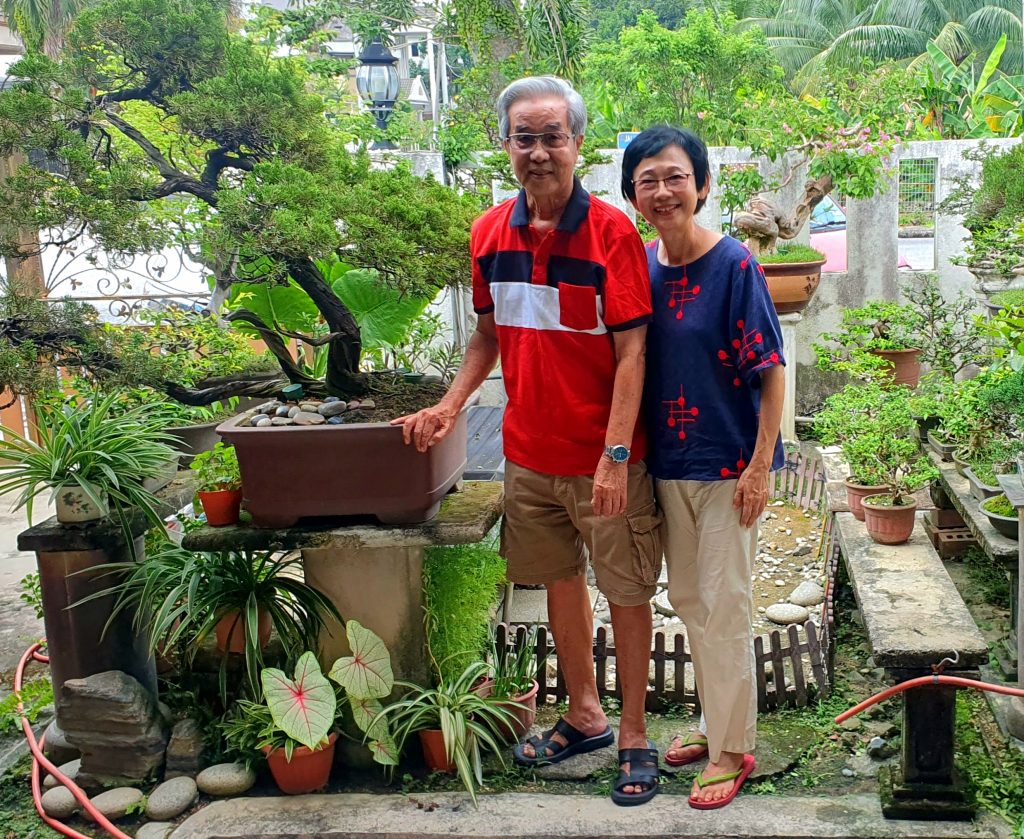
Ee considers himself lucky to share this passion for Bonsai with his wife, Wai Yin. Yin shares how she loved gardening since her younger days and it was only natural for her to gravitate towards cultivating Bonsai with her husband. “I personally love Bonsai trees because they’re so beautiful. Moreover, to see an ordinary plant bloom into a beautiful plant after caring for it, is so enriching for me,” Yin shares.
“When Chen Yoon goes out with his brother, I would also just follow. It was like going out on a date,” Yin said, with a playful glance at Ee. “From then on, I started getting interested in Bonsai as well. It was quite enjoyable going to all the bonsai gardens and listening to the bonsai masters giving tips on how to manage the Bonsai tree.”
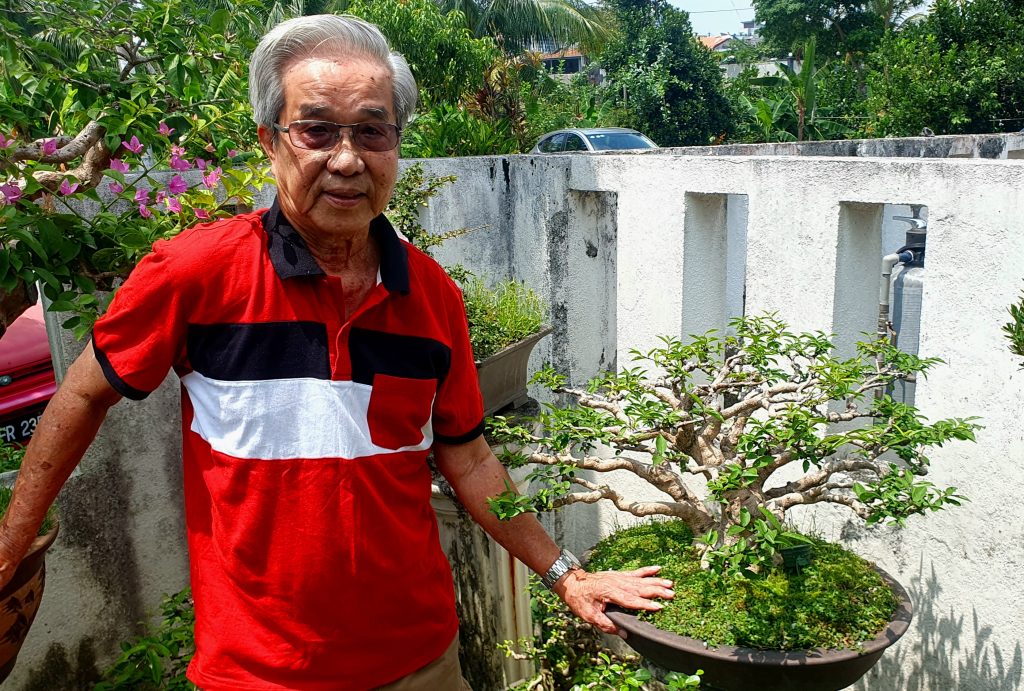
Among the many Bonsai trees artfully arranged in their little garden, Ee and Yin each have their own special Bonsai tree which they would individually tend and shape to suit their own preferred styles.
Transforming the tree
Like his wife, Ee also finds joy and satisfaction in seeing his hard work coming to fruition.
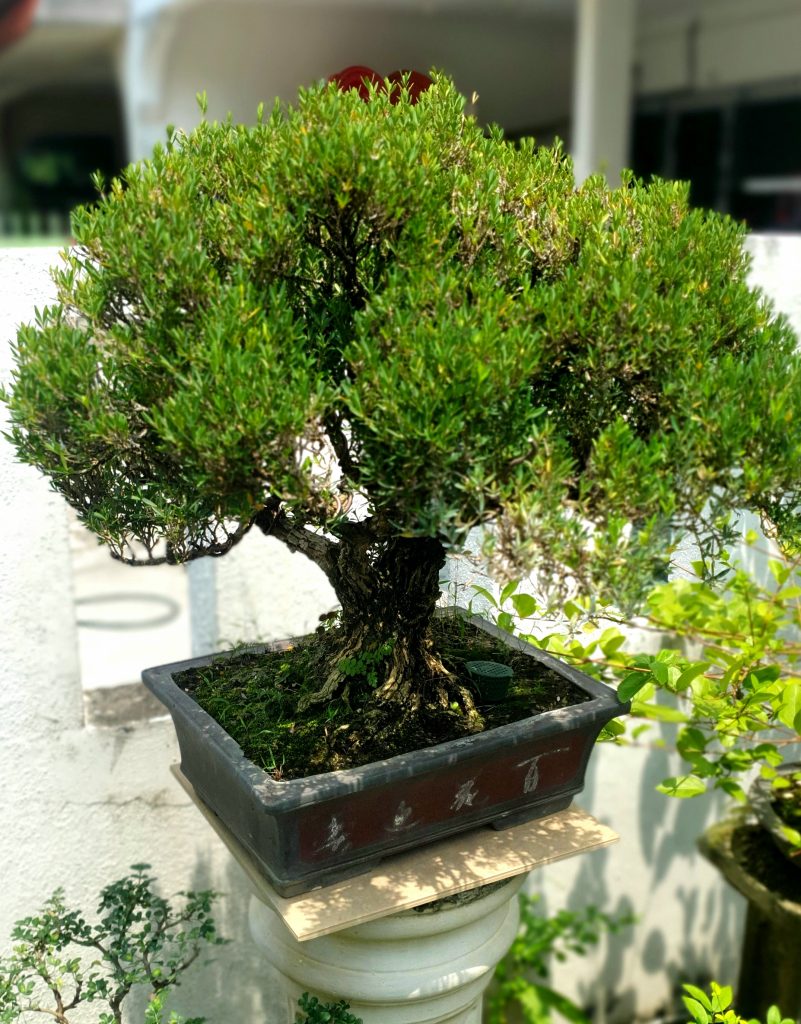
“Before we shape the tree, we have to decide what kind of Bonsai style we’d like the plant to form into. The styles I usually go for are the windswept, cascading and informal style,” Ee said with a sagely look.
“After you’ve decided on a style, you then need to visualize how the Bonsai tree will become. In the beginning, your tree may be without a proper shape. That’s where you come in to transform it, branch by branch, leaf by leaf.”
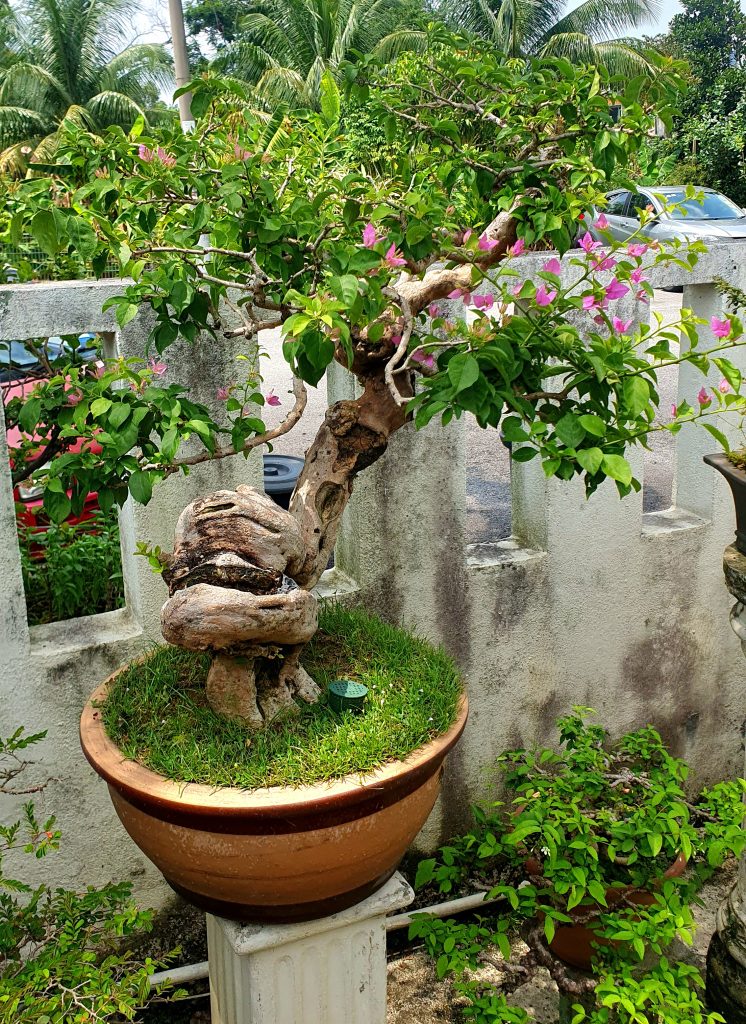
“Once I saw this plant on the road side which someone had threw away. It was practically bald, only the branches were left. I told myself that this plant has got potential, so I took it home and nursed it back. Now it’s one of my pride and joy in the garden.”
According to Ee, caring for a Bonsai tree can be tough but he has some tricks up his sleeve that he uses to keep his trees alive and growing.
“Your plant must always be in full sunlight. If you’re going outstation, you can put a small trough under the pot. When the soil is dry, it will suck up the water and your bonsai won’t die of dehydration. This is for smaller or medium size plants though,” Ee happily shares. “Next, don’t put those chicken poop as fertilizer because it will kill the roots. Rather, use those slow release fertilizers.”
Life abundant with Bonsai
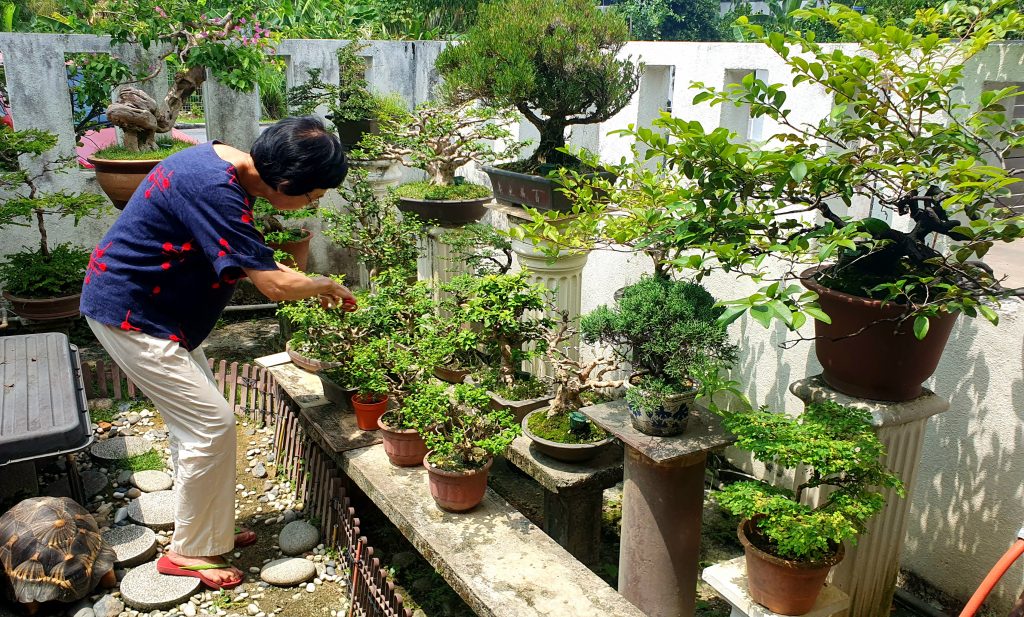
Ee believes that Bonsai has helped him tremendously in coping with retirement and aging.
“Doing Bonsai keeps my mind active. Your mind has to be creative as you manipulate the tree. You have to envision, think, and do the necessary trimming when the branches go out of place. You’d come to admire your work on the tree as the days pass.”
Ee then shares one last anecdote on how his passion translated into real life experience as well.
“When I was a couple years into retirement, I had the opportunity to help give English tuition to my neighbour’s three children. They were from a Chinese school and their father wanted them to ace their English language exams before they entered university,” Ee recalled.
“It was tough in the beginning but my experience with Bonsai helped. Patience was key. I had to be creative and nurturing while teaching them. Slowly but surely, their English proficiency improved by leaps and bounds over the several years I was with them.”
“Now, two of them are trained doctors while the youngest is a pharmacist. The feeling of joy and satisfaction I have in seeing their success is indescribable. But I was happiest to see my neighbour grinning with pride. Not just at his children’s success, but also at his own Bonsai tree!” Ee said with laughter. “I guess, throughout the years with me teaching at his home, he too got bitten by the Bonsai Bug.” – Patrick Chin